


Getting dental implants can feel overwhelming if you don’t know what to expect. The good news is that the process follows clear steps that lead to a strong and natural-looking replacement tooth.
The dental implant process typically takes three to nine months from your first consultation to your final restoration, with the timeline depending on your bone health, healing speed, and whether you need any extra procedures.
Understanding each phase helps you feel more prepared and confident about your decision.
The dental implant process involves several appointments where your dental team evaluates your mouth, places the implant post, allows time for healing, and attaches your new tooth.
While the timeline varies from person to person, knowing what happens at each stage can reduce worry and help you plan ahead.
This guide walks you through every step of getting dental implants so you know exactly what your journey will look like.
You’ll learn about the initial consultation, any prep work that might be needed, the surgery itself, the healing period, and how your final tooth gets attached. By the end, you’ll have a clear picture of how dental implants can restore your smile and what to expect along the way.
Key Takeaways
- The dental implant process includes consultation, implant placement surgery, a healing period of two to six months, and final restoration attachment
- Your timeline depends on your bone density, overall health, number of teeth being replaced, and whether you need tooth extractions or bone grafting
- Dental implants provide a permanent tooth replacement that can last many years with proper care and regular dental visits
Learn how the dental implant process works from evaluation to final tooth restoration
Table of Content
- Understanding Dental Implants and Their Benefits
- Initial Evaluation and Personalized Treatment Planning
- Preparatory Procedures and Pre-Surgical Steps
- Dental Implant Surgery: Placement and Healing
- Abutment, Final Restoration, and Aftercare
- Frequently Asked Questions
Understanding Dental Implants and Their Benefits
A dental implant serves as an artificial tooth root that provides a permanent solution for missing teeth, offering stability and function that closely mimics natural teeth.
Unlike traditional dentures or dental bridges, implants integrate directly with your jawbone to create a secure foundation for replacement teeth.
How Dental Implants Work
A dental implant is a small titanium post that an oral surgeon or periodontist places into your jawbone. The post acts as an artificial tooth root that supports your replacement tooth.
The implant works through a process called osseointegration. During this process, your jawbone grows into and fuses with the titanium post. This creates a solid bond that holds the implant in place.
Once the implant fuses with your bone, your prosthodontist attaches a connector piece called an abutment. The abutment sits on top of the implant post and connects to your final restoration.
Your replacement tooth, called a crown, then attaches to the abutment.
The titanium material is important because it won’t slip or cause the bone damage that traditional tooth replacement options sometimes create. Your body accepts the titanium and allows bone to grow around it naturally.
Key Advantages Over Other Tooth Replacement Options
Permanence and durability stand out as major benefits of dental implants. Dental implants can last for many years with proper care, while dentures typically need replacement every 5-10 years.
Bone preservation sets implants apart from bridges and dentures. When you lose a tooth, your jawbone begins to shrink in that area. Implants stimulate the bone just like natural tooth roots, preventing bone loss and maintaining your facial structure.
Better function means you can eat, speak, and smile with confidence. Unlike removable dentures that can slip or click, implants stay firmly in place. You won’t need to avoid certain foods or worry about your teeth moving when you talk.
Protection of other teeth is another key advantage. A dental bridge requires grinding down adjacent healthy teeth to support the replacement tooth. Implants don’t affect your neighboring teeth at all.
They also prevent your remaining teeth from shifting into the gap left by missing teeth.
Ideal Candidates for Dental Implants
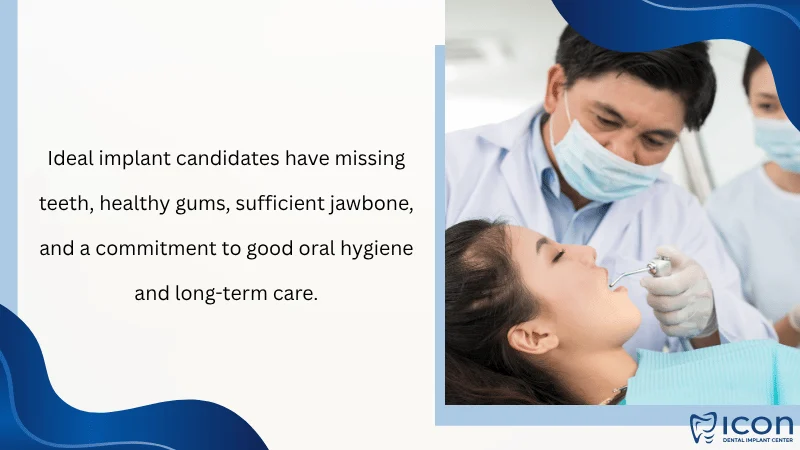
You might be a good candidate for implants if you have one or more missing teeth and want a permanent solution. Your jawbone needs to have reached full growth, which typically happens by late teens or early adulthood.
Adequate bone density is essential for implant success. Your jawbone must be thick enough and strong enough to hold the implant securely. If you don’t have enough bone, you may still qualify after a bone grafting procedure.
Healthy gums and oral tissues are necessary for healing and long-term success. Active gum disease may require gum disease treatment before implant placement. Your overall health matters too, since certain conditions can affect bone healing.
You should be willing to commit several months to the process and maintain good oral hygiene habits. Smoking can significantly increase the risk of implant failure, so non-smokers tend to have better outcomes.
Your dentist will evaluate your specific situation to determine if implants are right for you.
Schedule your consultation in Southfield, MI to start your dental implant process with confidence
Initial Evaluation and Personalized Treatment Planning
Your dental implant journey begins with a detailed evaluation where your dentist assesses your oral health, examines bone density, and creates a customized treatment plan.
This planning phase uses advanced imaging technology to ensure you’re a good candidate for dental implants and to map out the precise placement strategy.

Comprehensive Consultation Process
During your initial consultation, your dentist will review your complete medical and dental history. They’ll ask about medications you take, any health conditions you have, and your goals for treatment.
Your dentist will examine your mouth to check your oral hygiene, remaining teeth, and gum health. They’ll look at the space where your implant will go and assess whether you have enough bone to support it.
This visit is your chance to ask questions about the procedure, timeline, and costs.
The dentist will also discuss whether you need any preparatory work. Some patients need tooth extractions or treatments for gum disease before moving forward.
Being open about your health history helps your dentist create the safest, most effective plan for your needs.
Diagnostic Imaging and Digital Impressions
Your dentist will take a dental x-ray to see your jaw structure and bone quality. Most practices now use CBCT (cone beam computed tomography) scans, which create 3D images of your jaw, teeth, and surrounding tissues.
CBCT scans show your bone density and help identify important structures like nerves and sinuses. This detailed view lets your dentist plan the exact angle, depth, and position for your implant.
The scan typically takes just a few minutes and doesn’t cause any discomfort.
Many offices also take digital impressions of your teeth. These computer-generated models are more accurate and comfortable than traditional molds. The digital data helps create surgical guides and your final restoration.
Developing a Custom Implant Plan
Using your scans and impressions, your dentist creates a personalized treatment plan for your dental implant. This plan specifies exactly where the implant will go, what size is needed, and whether you’ll need bone grafting first.
Your dentist may use surgical guides based on your CBCT scan. These guides fit over your teeth during surgery and direct the implant placement with precision. This technology makes the procedure more predictable and can reduce healing time.
The treatment plan also includes your timeline from start to finish. You’ll know how long each healing phase will take and when you’ll receive your final restoration.
Contact our Southfield, MI team to discuss each step of your implant treatment plan
Preparatory Procedures and Pre-Surgical Steps
Before your dentist can place the implant itself, they may need to prepare your mouth through tooth extraction, bone grafting, or sinus lifts.
These preparatory steps create a strong foundation for your new tooth implant and directly affect your overall implant timeline.
Tooth Extraction and Site Preparation
If you still have a damaged tooth that needs replacement, your dentist will remove it first. Tooth extraction involves numbing the area with local anesthesia or using sedation to keep you comfortable.
Sometimes your dentist needs to section the tooth and remove it in parts. After extraction, they’ll prepare the site by cleaning out any infection and shaping the socket.
The extraction site typically needs to heal for several weeks before implant placement.
In some cases, your dentist can place the implant immediately after extraction. However, most patients need to wait 3-4 months for complete healing. This waiting period allows your gums and bone to recover properly.
Bone Grafting and Sinus Lifts
You might need a bone graft if your jawbone isn’t thick or dense enough to support the implant. During bone grafting, your dentist surgically places supplemental bone material into your jaw.
The graft material can come from several sources:
- Synthetic bone materials
- Bone from another area of your body
- Processed human or animal donor bone
A sinus lift is a specific type of bone graft for upper back teeth. This procedure raises the sinus membrane and adds bone beneath it to create enough space for the implant.
After bone grafting, you’ll need to wait 3-6 months for the new bone to integrate with your existing jawbone before moving forward.
Managing Complex Cases with Multiple Implants
Placing multiple implants or planning a full-arch restoration requires more extensive preparation and coordination. Your dentist will create a detailed treatment plan that maps out exactly where each implant will go.
For full-arch restoration, you might need 4-6 implants per arch to support a complete set of replacement teeth. The implants timeline for complex cases typically takes longer than single tooth replacement.
Your dentist may stage the procedures over several appointments to allow proper healing between each phase.
Implant recovery for multiple implants follows the same basic principles as single implants, but you may experience more swelling or discomfort.
Your dentist will provide specific instructions based on how many implants you’re receiving and their locations in your mouth.
Dental Implant Surgery: Placement and Healing
The implant placement procedure involves surgically inserting a titanium post into your jawbone, followed by a crucial healing period where osseointegration occurs.
Understanding what happens during oral surgery and the weeks that follow will help you prepare for recovery.

Implant Placement Procedure and Sedation Options
Your dental implant surgery begins with choosing the right anesthesia option for your comfort level. Most patients receive local anesthesia to numb the surgical area completely.
If you feel anxious about the procedure, your dentist may offer nitrous oxide (laughing gas) or oral sedation to help you relax.
During implant insertion, your surgeon makes a small cut in your gum tissue to expose the jawbone. They then drill a precise hole where the titanium implant will be placed. The titanium post gets inserted deep into the bone to act as your new tooth root.
Many dental practices now use guided surgery with 3D imaging technology. This approach allows your surgeon to place the implant in the exact position planned before your procedure. The entire implant placement typically takes 1-2 hours per implant.
After placing the titanium post, your surgeon closes the gum tissue with sutures. You might receive a temporary crown or leave the site to heal under the gums, depending on your specific treatment plan.
Osseointegration and Healing Period
Osseointegration is the process where your jawbone grows into and fuses with the surface of the titanium implant. This biological process creates a strong foundation for your replacement tooth, just like natural tooth roots support your existing teeth.
The healing period for osseointegration usually takes 3-6 months. Your lower jaw typically heals faster (3-4 months) than your upper jaw (5-6 months) because the bone density differs between the two areas.
During implant healing, your body deposits new bone cells around the titanium post. The implant becomes firmly anchored in your jawbone as this new bone formation continues.
You won’t feel this process happening, but it’s essential for long-term implant success.
Your dentist will schedule follow-up appointments throughout the healing stages to monitor your progress. They’ll check that the implant is integrating properly before moving to the next phase.
Post-Surgical Care and Common Symptoms
Some swelling and bruising around the surgical site is normal after implant surgery. You’ll likely experience the most swelling during the first 48-72 hours.
Apply ice packs or a cold compress to your face for 20 minutes on and 20 minutes off during the first day.
Minor bleeding at the implant site can occur for the first 24 hours. Bite down gently on gauze pads to control any bleeding. Pain and discomfort are usually manageable with over-the-counter pain relievers or prescription medication from your dentist.
Your post-surgical care routine should include:
- Taking prescribed antibiotics to prevent infection
- Rinsing gently with warm salt water after 24 hours
- Avoiding the surgical area when brushing
- Not smoking or using tobacco products
Follow a soft food diet for at least the first week after implant placement. Choose foods like yogurt, mashed potatoes, smoothies, and scrambled eggs. Avoid hot, spicy, or crunchy foods that could irritate the surgical site.
Watch for signs of infection such as increased pain, excessive swelling after three days, or pus around the implant. Contact your dentist immediately if you notice any concerning symptoms.
Your sutures will either dissolve on their own or need removal at a follow-up visit within 7-14 days.
Abutment, Final Restoration, and Aftercare
After your implant fuses with the bone, your dentist will attach a connector piece called an abutment and create your replacement tooth. You’ll also need regular check-ups to keep your implant healthy for years to come.
Abutment Placement and Healing Cap
Your dentist will schedule you for abutment placement once the implant has fully healed. This usually happens three to six months after your initial surgery.
During this visit, your dentist will make a small opening in your gum to expose the implant. They’ll then attach the abutment, which is a small connector piece that screws into the implant post.
The abutment sticks up through your gums and serves as the base for your custom crown.
Your dentist may place a healing cap on top of the abutment. This cap protects the area and shapes your gum tissue around the abutment.
The healing cap stays in place for about two weeks while your gums heal and form a natural collar around the abutment.
You might have some mild soreness after abutment placement. This is normal and usually goes away within a few days with over-the-counter pain medicine.
Creating and Placing the Custom Crown or Restoration
Once your gums heal around the abutment, you’ll return for impressions. Your dentist or prosthodontist will take detailed molds or digital scans of your mouth. These impressions capture the exact shape and position needed for your custom crown.
A dental lab will use these impressions to create your custom restoration. They’ll match the color, size, and shape to your natural teeth. This process typically takes two to three weeks.
Your dentist may give you a temporary crown while you wait. The temporary crown protects the abutment and lets you eat and speak normally.
When your final restoration is ready, you’ll come back for crown placement. Your dentist will check the fit and color before securing it to the abutment.
They’ll make sure your bite feels comfortable and natural. The crown attaches to the abutment with either a small screw or dental cement.
Follow-Up Appointments and Maintenance for Long-Term Success

Your dentist will schedule follow-up appointments to check how your implant is healing. You’ll typically have a check-up a few weeks after crown placement, then again at three months and six months.
Your oral hygiene routine is critical for implant success:
- Brush twice daily with a soft-bristled toothbrush
- Floss around your implant every day using special floss or interdental brushes
- Use an antibacterial mouthwash if your dentist recommends it
- Avoid smoking, which can cause implant failure
Regular dental check-ups every six months help catch any problems early. Your dentist will examine your implant and take X-rays to make sure the bone stays healthy around it.
If you grind your teeth at night, your dentist may recommend a night guard. This protects your implant and crown from excessive pressure. With proper brushing and flossing and regular visits, your dental implant can last 25 years or longer.
Frequently Asked Questions
Many people wonder about the details of each appointment and how long the entire process takes. Cost differences and healing signs are also common concerns.
What happens during the initial dental implant consultation, and what questions should I ask?
Your first appointment includes a full exam of your mouth and jaw. The dentist will take 3D images or X-rays to check your bone density and overall oral health.
You’ll discuss your medical history and any medications you take. The dentist will explain which type of implant might work best for you and create a treatment plan.
Ask about the total timeline for your specific case. Find out if you need any extra procedures like bone grafting or tooth extractions before implant placement.
You should also ask about the total cost and what payment options are available. Understanding the experience level of the dental team and their success rates can help you feel more confident.
What is the typical timeline for getting a dental implant from start to finish?
The dental implant process typically takes 3 to 9 months from your first consultation to your final restoration. Your individual timeline depends on your bone health and whether you need preparatory work.
Single tooth implants may take less time than full arch replacements. However, this isn’t always true since some single tooth cases need bone preparation that can extend the timeline.
The longest part of the process is osseointegration, when your jawbone fuses with the implant. This healing phase usually takes 2 to 6 months and cannot be rushed.
Some patients receive temporary teeth on the same day as implant placement. The final permanent restoration is placed after complete healing.
What are the main steps of the dental implant procedure, and how many appointments does it usually take?
The process starts with your consultation where imaging and planning happen. Next comes any needed preparatory work like extractions or bone grafting.
During the surgical appointment, the dentist places the titanium implant post into your jawbone. This procedure typically takes 1 to 2 hours and is done under local anesthesia with sedation options available.
After healing is complete, you’ll have an appointment where the dentist takes digital scans or impressions of the implants. These measurements are used to design your custom crown, bridge, or denture.
Most patients have 4 to 6 appointments total. The exact number depends on how complex your case is and whether you need additional procedures.
What are the healing stages after implant placement, and how can I tell if healing is on track?
The first 1 to 2 weeks involve initial wound healing at the surgical site. You’ll likely have some swelling, minor discomfort, and bruising that gradually improves.
Osseointegration begins right away but takes 2 to 6 months to complete. During this time, your bone cells grow around the implant post to secure it in place.
Normal healing means your pain decreases each day and swelling goes down within a week. Your gums should look pink and healthy without excessive redness or pus.
Contact your dentist if you experience increasing pain, fever, prolonged bleeding, or implant movement. These could be signs that healing isn’t progressing properly.
Does the final restoration stage hurt, and what does it feel like when the crown is attached?
Placing the final crown or restoration is not painful. The procedure doesn’t involve cutting into tissue or bone like the initial implant surgery did.
You might feel some pressure as the dentist attaches the crown to the implant post. Most people describe it as mild discomfort rather than actual pain.
The dentist will check your bite and make adjustments so everything feels natural. You may need a day or two to get used to how the new tooth feels in your mouth.
Some people experience slight sensitivity for a few days after the crown is placed. This usually goes away quickly as you adjust to your new restoration.
What types of dental implants are available, and how do costs vary between them?
Single tooth implants replace one missing tooth with an individual implant and crown. These are typically the least expensive option for replacing one tooth.
Multiple tooth bridges use two or more implants to support several replacement teeth. This option costs more than a single implant but less than replacing each tooth individually.
Full arch solutions replace all teeth on the upper or lower jaw using 4 to 6 implants. All-on-4 or All-on-6 treatments provide a full set of teeth attached to multiple implants.
Costs vary based on how many implants you need, the materials used, and whether you require preparatory procedures.
Understanding the timeline differences between approaches can help you budget for the total treatment. Geographic location and the dentist’s experience level also affect pricing.


