
Missing teeth can affect how you eat, speak, and feel about your smile. If you are looking into tooth replacement, you have probably come across dental implants vs dentures as your two main choices.
Both options can restore your smile, but they work in different ways and offer different levels of comfort over time.
Dental implants tend to offer better long-term comfort because they fuse with your jawbone and function like natural teeth. While dentures rest on your gums and may shift or need adjustments over the years.
That said, comfort depends on your unique mouth, budget, and oral health. Your dentist can help you figure out which option fits your daily life best.
This article breaks down the differences between these two options so you can make a confident choice.
You will learn how each option affects your jawbone health, what to expect during treatment, and how much upkeep each one needs.
Key Takeaways
- Dental implants and dentures both restore missing teeth but differ in comfort, stability, and daily upkeep.
- Implants can help protect your jawbone and facial structure, while dentures may not offer the same long-term support.
- Your budget, oral health, and lifestyle all play a role in choosing the right tooth replacement option for you.
Table of Content
- The Key Differences at a Glance
- What Determines Everyday Comfort
- Jawbone Health and Facial Support Over Time
- Treatment Process, Recovery, and Maintenance
- Costs, Candidacy, and Choosing the Right Solution
- Frequently Asked Questions
The Key Differences at a Glance
Dental implants and dentures both replace missing teeth, but they work in very different ways. Understanding how each option fits into your jaw and daily life can help you figure out which one feels right for you.
How Dental Implants Replace Tooth Roots
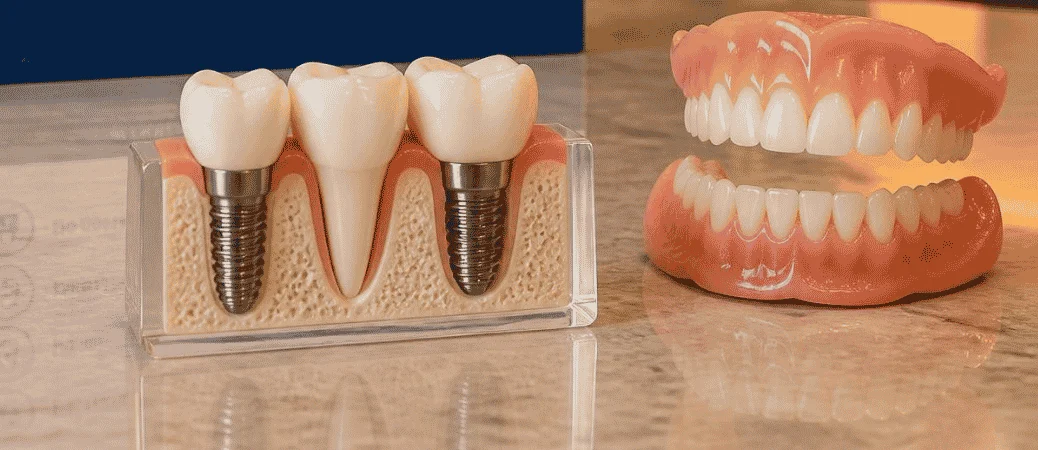
Dental implants are small titanium posts that your dentist places directly into your jawbone. These posts act as artificial tooth roots, taking the place of your natural tooth roots that used to hold your teeth in place.
Once the bone heals around the implant, it becomes a sturdy anchor. Your dentist then attaches a crown, bridge, or denture on top, depending on how many teeth you need to replace.
Because implants fuse with your jawbone, they help keep the bone strong and healthy. This is a big reason why many people find implants comfortable for years.
How Traditional Dentures Stay in Place
Dentures rest on top of your gums instead of being fixed into your jawbone like an implant and crown.
Conventional dentures rely on suction, the natural ridges of your gums, and sometimes dental adhesive to stay securely in place.
Removable dentures can be taken out each night for cleaning. However, because they rest on the gums rather than being anchored into the jawbone, they may shift slightly when you eat or speak.
Over time, changes in your jawbone can affect how your dentures fit. Having a professionally fitted crown with regular evaluation helps maintain comfort, stability, and proper function as your mouth changes.
Options for Replacing One Tooth, Several Teeth, or a Full Arch
The right tooth replacement option depends on how many teeth you’re missing, your jawbone health, and the level of stability you need.
Your experienced dental professional team can evaluate your needs and recommend the most appropriate treatment.
- One missing tooth: A single-tooth dental implant replaces one missing tooth with an implant post and custom crown without relying on neighboring teeth for support.
- Several missing teeth: Multiple dental implants can replace several missing teeth while providing stable support for comfortable biting and chewing.
- Full-arch tooth loss: Implant-supported dentures can replace an entire upper or lower arch, providing greater stability than traditional removable dentures.
- Complex bone loss: For patients who have experienced significant jawbone loss, advanced implant solutions may be considered after evaluation to determine the available bone and appropriate treatment approach.
Each option has its own comfort level and upkeep needs.

What Determines Everyday Comfort
Comfort with dentures or implants comes down to how stable your teeth feel, how well you can chew, and whether your gums stay irritation-free. These three factors shape how you eat, talk, and go about your day.

Stability While Eating and Speaking
Stability is often the first thing you notice, good or bad. Removable dentures sit on your gums and can shift when you laugh, chew, or speak quickly.
This movement can cause clicking sounds or make you feel unsure about talking in public.
Fixed implant restorations work differently. Because they anchor into your jawbone, they stay in place no matter what you’re doing. You won’t need to worry about your teeth slipping during a conversation or a meal.
This difference in stability is one reason many people compare dental implants and dentures for comfort and stability before deciding which option fits their daily routine.
Chewing Strength and Food Choices
Bite force plays a big role in what you can comfortably eat. Removable dentures typically restore a smaller portion of your natural chewing efficiency, which means tougher foods like steak or raw vegetables can be harder to manage.
Implant-supported restorations restore much more of your original bite strength. This lets you chew a wider variety of foods without hesitation.
Your food choices often shift based on this difference. If chewing feels like work, you may start avoiding certain foods altogether, which can affect your diet over time.
Fit, Pressure Points, and Gum Irritation
How your prosthetic teeth fit against your gums matters just as much as how strong your bite feels. Removable dentures rest directly on soft tissue, so pressure isn’t spread evenly.
This can lead to sore spots, pressure points, and ongoing gum irritation, especially as your jawbone changes shape over the years.
A fixed prosthesis supported by implants doesn’t rely on gum pressure the same way. Since it’s anchored to your bone, your gums aren’t carrying the weight of daily biting and chewing.
Fit issues with dentures often mean more visits to your dentist for adjustments. Implants tend to need fewer of these follow-up fixes once they’re properly placed, which many people find easier to live with long term.
Jawbone Health and Facial Support Over Time
Your jawbone needs regular pressure from tooth roots to stay strong. When you lose teeth, your bone can start to shrink, which affects your face shape and your bite over time.
Why Bone Resorption Happens After Tooth Loss
Your jawbone stays strong because your tooth roots send pressure signals every time you bite or chew. This pressure tells your body to keep sending nutrients and blood to that area.
Once you lose a tooth, that pressure disappears. Your body notices there’s no more “job” for that section of bone, so it slowly breaks down the tissue and reabsorbs it. This process is called bone resorption.
Bone loss happens fastest during the first year after tooth loss, but it keeps going for the rest of your life if the tooth isn’t replaced.
You may notice your face looking sunken or your jawline changing shape as your jawbone density drops.
How Implants Can Support Bone Preservation
Dental implants work differently than dentures because they replace your tooth root, not just the visible crown.
A titanium post gets placed directly into your jawbone, where it fuses with the bone through a process called osseointegration.
This fusion means your implant sends the same kind of pressure signals your natural tooth root used to send. Your jawbone reads these signals as a reason to stay active and strong.
Dentures can’t do this because they sit on top of your gums instead of connecting to your bone.
Over time, dentures may accelerate bone resorption rather than stop it, which can affect your facial structure and make your dentures fit less comfortably as your jaw shape changes.
When Bone Grafting or Advanced Implant Options May Help
If you’ve had missing teeth for a long time, your jawbone might not have enough width or height to support a standard implant. In that case, your dentist may suggest a bone graft.
A bone graft adds material to your jaw to build up the area so it can hold an implant securely. This process takes time to heal before your implant can be placed, but it creates a stronger foundation for long-term support.
For cases with severe bone loss, especially in your upper jaw, your dentist can also recommend zygomatic implants.
These longer implants anchor into your cheekbone instead of your jawbone, which can work well when there isn’t enough bone density left to graft effectively.
Treatment Process, Recovery, and Maintenance
Getting implants or dentures involves different steps, healing times, and daily care routines that can affect your comfort for years to come.
Knowing what to expect ahead of time can help you feel more prepared and confident in your choice.

Implant Surgery, Healing, and Final Restoration
Your journey starts with a dental evaluation, where your dentist checks your jawbone density, gum health, and overall oral health. This helps decide if you’re a good candidate for implants or if you need bone grafting first.
Implant placement is done using local anesthesia, so you shouldn’t feel pain during the procedure.
An experienced dental professional places a small titanium post into your jawbone, where it will fuse with the bone over several months in a process called osseointegration.
Once healing is complete, your dentist attaches an abutment, which connects the implant to your new tooth.
Then a prosthodontist or restorative dentist creates your custom implant crown or implant restoration designed to match your natural teeth.
Denture Fitting, Immediate Dentures, and Adjustments
Getting dentures usually takes less time than implants. Your dentist takes impressions of your mouth to create a custom fit, and your dentures are ready in a few weeks.
If you’re having teeth removed, your dentist may offer immediate dentures. These are placed right after extraction, so you’re not without teeth while you heal.
Keep in mind these often need extra adjustments as your gums shrink during the initial healing period.
Once your mouth fully heals, you’ll likely need a permanent set made or your immediate dentures relined for a better fit. Regular check-ins make sure your dentures stay comfortable as your mouth changes shape over time.
Daily Oral Hygiene and Professional Follow-Up
Whether you choose implants or dentures, good oral hygiene habits are key to long-term success.
Implant crowns are cared for just like natural teeth: brush twice a day, floss daily, and use interdental brushes if recommended.
Dentures need to be removed daily for cleaning with a denture brush and soaking solution. This helps prevent bacteria buildup and keeps your dentures fresh.
Don’t skip your regular dental exam. It will help you check for gum disease, screen for oral cancer, and make sure your implants or dentures still fit well.
Sticking to regular maintenance helps your smile stay healthy and comfortable for years to come.
Costs, Candidacy, and Choosing the Right Solution
Money matters when you’re picking a tooth replacement option, but so does your bone health and lifestyle.
Your dentist can help you weigh these factors during a dental evaluation to find the best fit for your mouth and your budget.
Upfront Costs, Ongoing Expenses, and Dental Insurance
Dental implant cost is higher upfront than traditional dentures. A single implant can run between $1,600 and $2,200, while a full set of dentures often costs less overall.
But price isn’t the whole story. Dentures need regular refitting, cleaning supplies, and adhesive over the years.
Professional dental clinic, Icon Implants and Dental Center provide a detailed dental implant cost breakdown to help you explain what’s included and what you may be paying for over the course of treatment.
Implants, on the other hand, act more like your natural teeth. You brush and floss them daily, and they rarely need extra maintenance once they’ve healed.
Dental insurance coverage varies a lot between the two options. Some plans cover a portion of denture costs but treat implants as an elective procedure, so you’ll want to check your policy before committing.
Here’s a quick breakdown:
- Dentures: Lower upfront cost, higher long-term maintenance
- Implants: Higher upfront cost, lower long-term maintenance
- Insurance: Often covers more of denture costs than implant costs
Who May Be a Good Candidate for Each Option

Your jawbone density plays a big role in deciding between implants vs dentures. Implants need enough healthy bone to hold the metal post in place.
If you’ve lost bone due to age, gum disease, or missing teeth for a long time, you might need bone grafting first. This adds time and cost to the process.
Dentures don’t have this requirement. They can be fitted no matter how much bone you have left, which makes them a good option for people who aren’t candidates for implants.
Your age and health also matter for dental implants. Younger, healthier patients often do well with implants since they can enjoy decades of use.
Older adults or those who want a faster, simpler process may prefer dentures instead.
When Implant-Supported Overdentures Offer a Middle Ground
If you like the idea of implants but don’t want (or can’t afford) a full set, implant-supported overdentures might work for you.
Also called implant-retained overdentures, these combine a few implant posts with a removable denture on top.
Instead of needing a post for every missing tooth, you might only need two to four implants per jaw to secure the denture in place.
This option offers more stability than traditional dentures since the denture snaps onto the implants instead of relying on adhesive. Many people find they can chew better and worry less about slipping.
For those wanting an even more permanent solution, fixed implant restorations attach directly to the jaw without any removable pieces.
This approach mimics full-arch restoration methods, giving you a fixed set of teeth that function much like natural ones.
Frequently Asked Questions
You probably still have some questions about comfort, cost, pain, and how long each option lasts. Here are simple answers to help you make the best choice for your smile.
Are dental implants more comfortable than dentures over the long term?
Yes, most people find implants more comfortable once they heal. Implants are fixed in your jaw, so they don’t move around when you talk or chew.
Dentures rest on your gums and can slip or rub, which sometimes causes sore spots. Over time, your jawbone can change shape, and this makes dentures feel less snug.
In fact, full-mouth dental implants tend to offer more predictable comfort over time compared to standard dentures.
How do the costs of dental implants and dentures compare?
Dentures usually cost less at first. A basic set of dentures for one arch often runs between $1,000 and $3,000.
Implants cost more upfront. A single tooth implant can cost $3,000 to $6,000, and a full set using the All-on-4 method can range from $14,000 to $36,000 per arch.
But dentures come with ongoing costs too. You’ll need adhesive, relines every few years, and a full replacement every five to ten years. Implants often cost less over time since they don’t need this kind of upkeep.
Are dental implants worth it for seniors, including people over 70?
Age by itself does not rule out getting implants. What matters more is your overall health and how much bone you have in your jaw.
Many seniors in their 70s and 80s get implants successfully. If you’re healthy enough for a minor surgery and have enough bone, implants can be a good long-term option even later in life.
Which option is more painful: getting implants or wearing dentures?
Getting an implant involves a small oral surgery, but it’s done with local anesthesia. Most people feel mild soreness for a few days afterward, which is often less than they expected.
Dentures don’t need surgery, but they can cause sore spots while your mouth gets used to them. Some people also deal with ongoing irritation if the dentures don’t fit well or shift while eating or talking.
What are the pros and cons of snap-in dentures compared with individual implants?
Snap-in dentures, also called implant-supported dentures, use two to four implants to hold a full denture in place. They don’t need adhesive and stay much more secure than regular dentures.
This option costs less than getting a full set of individual implants, often between $5,000 and $20,000. But snap-in dentures still come out for cleaning each night, unlike individual implants, which stay in place all the time.
Individual implants replace each tooth on its own, which means more support and a bit more chewing power. They also cost more since each tooth needs its own implant post and crown.
How long do dental implants and dentures typically last?
Implants can last 25 years or even a lifetime with good care. The crown on top may need to be replaced after 10 to 15 years, but the implant post itself often stays in place.
Dentures don’t last as long. Most need replacing every five to ten years because your jawbone changes shape over time, which affects how they fit.