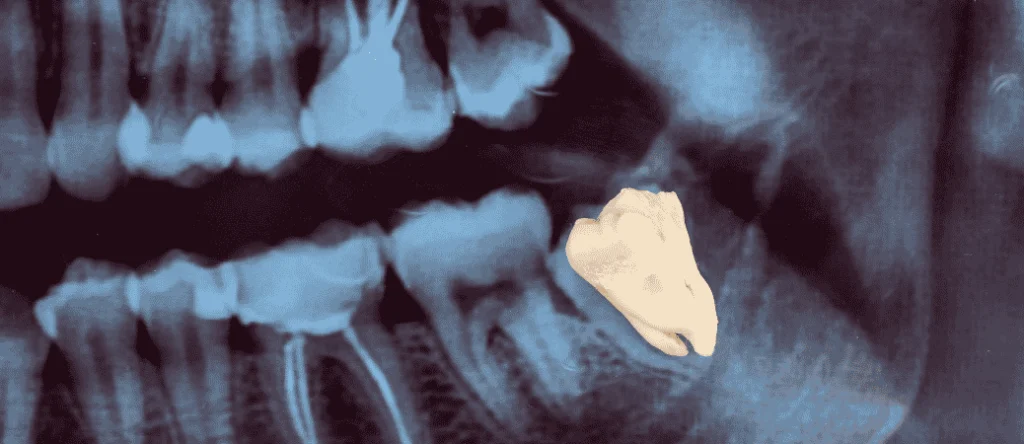
If severe dental anxiety has kept you out of the dentist’s chair for years, you are not alone, and you are not out of options.
Millions of adults avoid dental visits because of fear, not carelessness about their health. That avoidance is understandable, and it is also fixable.
Sedation dentistry for dental anxiety can give people with severe fear a more comfortable way to return to regular dental care.
It is not one single treatment or a guarantee of sleeping through your appointment.
It is a range of options, from light relaxation to deeper sedation, chosen to match your level of fear, your health history, and the work your mouth needs.
Some patients need only a little help staying calm. Others need more support to get through a root canal or extensive dental work without panic taking over.
This article looks at how dental fear and dental phobia develop, what actually happens during sedation, and how dental professionals decide which option fits your situation.
It also covers safety screening, recovery, and what a first visit back might look like after years away.
Key Takeaways
- Sedation dentistry offers a range of options, from light relaxation to deeper sedation, so severe anxiety does not have to block necessary treatment.
- Sedation calms the nervous system while local anesthesia numbs pain, and most patients still need both for comfortable, effective care.
- Health screening, monitoring, and planned recovery time help make sedation safe for the right candidates, including many people with sleep apnea or heart conditions.
Table of Content
- Can You Get Through Dental Treatment When Anxiety Feels Overwhelming?
- How Sedation Changes the Dental Experience
- Which Sedation Option May Fit Your Anxiety and Procedure?
- What Makes Sedation Dentistry Safe?
- Taking the First Comfortable Step Back to Regular Care
- Frequently Asked Questions
Can You Get Through Dental Treatment When Anxiety Feels Overwhelming?
Yes, most people with severe dental anxiety can get through dental treatment when sedation and a patient-centered provider are part of the plan.
Fear of the dentist is one of the most common medical fears in the country, and it rarely responds well to willpower alone.
When Dental Anxiety Becomes Dental Phobia
Dental anxiety is a feeling of nervousness before or during a visit. Dental phobia is stronger: it is an intense, persistent fear that can cause a racing heart, sweating, or a full panic response at the thought of an appointment.
A national study found that nearly three in four American adults report fear of the dentist, with 45.8% describing it as moderate and 26.8% as severe, according to a census-matched survey of dental fear and fear-treatment interest.
Common Triggers
Fear rarely comes from nowhere. Common triggers include:
- A painful or frightening past dental visit
- Feeling a loss of control while lying back in the chair
- Embarrassment about the condition of your teeth after years away
- A sensitive gag reflex that makes cleanings or X-rays feel unbearable
- Sensitive teeth that make even routine exams uncomfortable
From Fear of Pain to Fear of Needles
Fear of pain and fear of needles often travel together, and a low pain tolerance can make both worse. Some patients tense up the moment they see an injection, even if the actual discomfort is brief.
A strong gag reflex adds another layer, since it can make basic steps like taking impressions or X-rays feel like a struggle for both patient and dentist.
Why Delaying Care Can Make Future Treatment More Complex
Putting off dental care rarely makes a problem smaller. Untreated decay and gum disease progress quietly, and small issues can turn into infections, root canals, or tooth loss over time.
Coming back after years away often means more diagnosis and planning, but it does not mean you have done anything wrong by waiting.
How Sedation Changes the Dental Experience
Dental sedation calms your nervous system so treatment feels manageable instead of overwhelming. It works alongside, not in place of, the numbing medication your dentist already uses for most procedures.
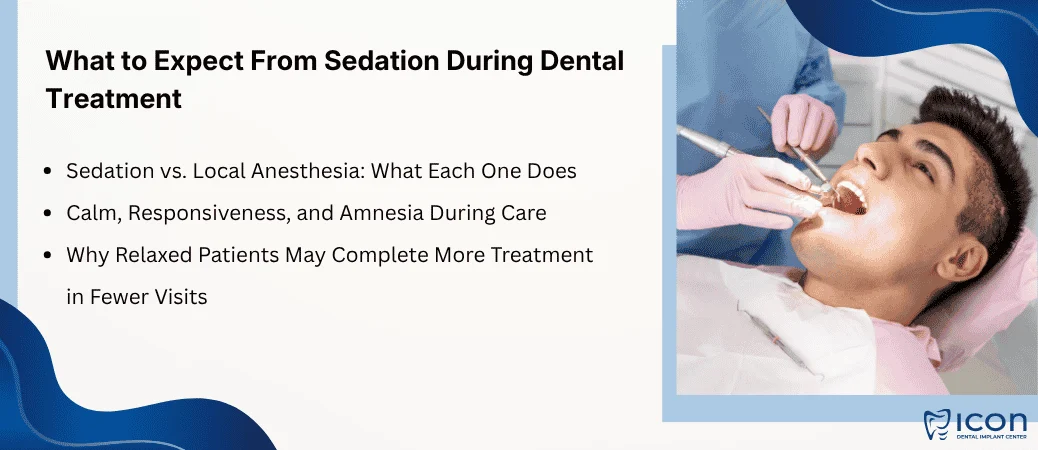
Sedation vs. Local Anesthesia: What Each One Does
Local anesthesia numbs a specific area of your mouth so you do not feel pain during the procedure itself.
Dental sedation works differently: it acts on your nervous system to ease anxiety, reduce awareness, and help you feel calm.
Most sedation appointments use both together, since sedation manages fear while local anesthesia manages pain.
Calm, Responsiveness, and Amnesia During Care
Sedation levels differ in how alert you remain and how much you recall afterward. With lighter sedation, you stay conscious and can respond to questions, though you feel far more relaxed.
Deeper sedation can bring partial amnesia, meaning you may remember little or nothing of the procedure, but this varies by person and by drug, so it is never promised as a guaranteed effect.
Why Relaxed Patients May Complete More Treatment in Fewer Visits
A calmer patient can often tolerate longer appointments, which sometimes means combining procedures that would otherwise need separate visits.
This matters for people who need extensive dental work like dental implants or a full mouth restoration, since fewer overall visits can mean less cumulative anxiety.
At Icon Implants and Dental Center, Dr. Radwa Elrefai considers each patient’s health, comfort, and treatment needs when planning care, rather than simply trying to complete more treatment in one appointment.
Which Sedation Option May Fit Your Anxiety and Procedure?
The right sedation option depends on your level of anxiety, health history, and the length and complexity of your procedure.
Understanding the different types of sedation dentistry can help you know what options may be discussed during your consultation.
Sedation techniques exist on a scale from minimal to general anesthesia, and providers match the level to your needs during a pre-treatment conversation.
| Sedation Type | Anxiety Level | Awareness | Typical Use |
| Nitrous oxide | Mild | Fully awake, relaxed | Cleanings, short fillings |
| Oral conscious sedation | Moderate | Drowsy, may drift off | Fillings, moderate procedures |
| IV sedation | Moderate to severe | Very relaxed, limited memory | Extractions, implant placement, longer work |
| General anesthesia | Severe or complex cases | Fully unconscious | Extensive oral surgery |
Nitrous Oxide for Mild Anxiety and Shorter Visits
Nitrous oxide, commonly called laughing gas, is a light form of minimal sedation breathed in through a small nasal mask.
It takes effect within minutes and wears off almost as quickly once the mask comes off, making it a practical fit for shorter appointments and mild nervousness.
Oral Conscious Sedation for Moderate Anxiety
Oral sedation uses a prescribed pill, often a benzodiazepine such as midazolam, taken before or shortly after you arrive.
This produces mild to moderate sedation: you stay conscious but feel noticeably drowsy and calmer, and many patients describe the appointment as passing in a blur.
IV Sedation for Longer or More Complex Treatment
IV sedation delivers medication directly into a vein, allowing the dental team to adjust the dose throughout the visit.
IV sedation may be considered for longer or more involved procedures, including certain oral surgeries such as wisdom teeth removal, depending on your anxiety level, health history, and treatment needs.
When Deep Sedation or General Anesthesia May Be Considered
Deep sedation or general anesthesia is reserved for select cases: extensive oral surgery, patients with severe dental phobia that has blocked care for years, or those who cannot cooperate with lighter sedation.
These levels require closer monitoring and specialized training, so they are typically provided by a dentist anesthesiologist or oral surgeon rather than a general dentist.

What Makes Sedation Dentistry Safe?
Sedation dentistry is considered safe for most patients because of careful screening, continuous monitoring, and provider training standards set by groups like the American Dental Association. Safety planning starts long before any medication is given.
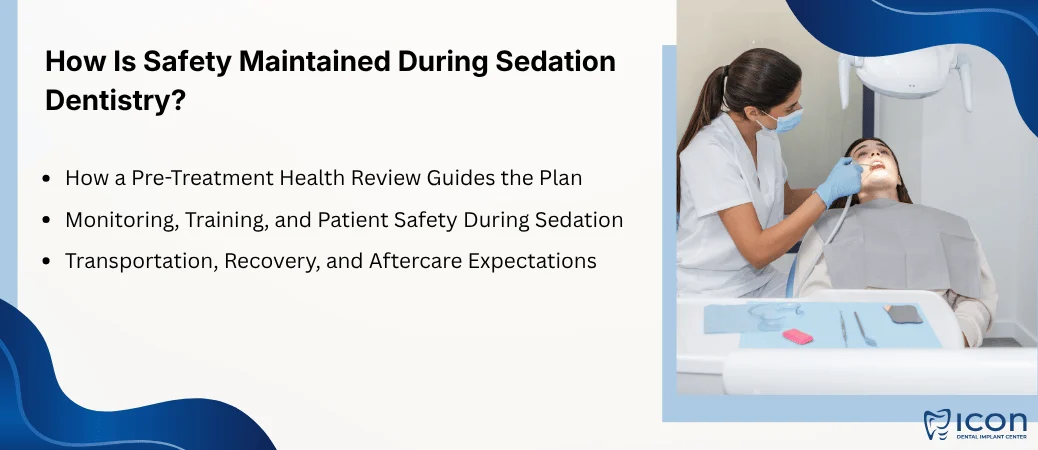
How a Pre-Treatment Health Review Guides the Plan
Your dental team will ask about your full medical history, current medications, and any past reactions to sedation or anesthesia.
Conditions such as sleep apnea, cardiovascular disease, pregnancy, or certain medications can change which sedation option is safest for you.
Being honest about all of this, including recreational substance use, helps your sedation dentist choose the right plan.
Monitoring, Training, and Patient Safety During Sedation
For any sedation beyond nitrous oxide, your provider tracks your oxygen level, heart rate, and blood pressure throughout the appointment.
Deeper sedation levels require providers with more advanced training, since the deeper the sedation, the more monitoring and expertise are needed.
Searching for sedation dentistry near you should include checking that the practice has the right credentials for the sedation level you need.
Transportation, Recovery, and Aftercare Expectations
Plan for a responsible adult to drive you home after any sedation beyond nitrous oxide, and expect to rest for the remainder of the day.
Mild grogginess, nausea, or a sore throat can linger for a few hours after deeper sedation, and these effects usually fade within a day.
Avoid alcohol for at least 24 hours before and after your appointment, and wear loose, comfortable clothing so monitoring equipment can be attached easily.
Taking the First Comfortable Step Back to Regular Care

Getting back into regular dental care after years away does not require facing your fear all at once.
A short first visit focused on talking through your history and your anxiety, without any treatment that day, can be enough to start rebuilding trust.
From there, a sedation dentist can walk you through options at a pace that feels manageable.
Once a comfortable first appointment is behind you, future visits tend to feel less daunting, which supports steadier oral health over time.
Regular dental visits, even simple teeth cleanings, become easier to keep once the fear of the unknown is addressed.
Frequently Asked Questions
Can you be sedated at the dentist for severe dental anxiety?
Yes, sedation is commonly used for patients with severe dental anxiety, including those who have avoided care for years.
Your dentist will review your health history and the treatment needed before recommending a sedation level that fits your situation.
Will I be awake during oral or IV sedation dentistry?
You typically stay conscious during oral sedation and IV sedation, though you feel deeply relaxed and drowsy.
Some patients drift into a light sleep-like state and can still be responsive if the dental team needs to check on them.
Is dental sedation dangerous if I have sleep apnea or heart disease?
Sleep apnea and cardiovascular disease can change which sedation option is safest, but they do not automatically rule out sedation.
Your provider will review your health history closely and may choose a lighter sedation level or recommend care with a specialist trained to manage these conditions.
What drug is used for IV sedation in dentistry?
IV sedation commonly uses benzodiazepines such as midazolam, adjusted throughout the appointment based on your response.
The exact medication and dose depend on your health history, weight, and the length of the procedure.
Do I need someone to drive me home after sedation dentistry?
Yes, you need a responsible adult to drive you home after any sedation beyond nitrous oxide. Judgment, coordination, and reaction time can stay impaired for several hours, so driving yourself is not considered safe.
Is sedation dentistry covered by insurance?
Coverage varies widely and is often inconsistent between plans.
Many dental insurers only cover sedation when it is medically necessary, such as for surgical extractions or patients with certain disabilities, so it helps to request a written estimate and check both dental and medical coverage before your appointment.