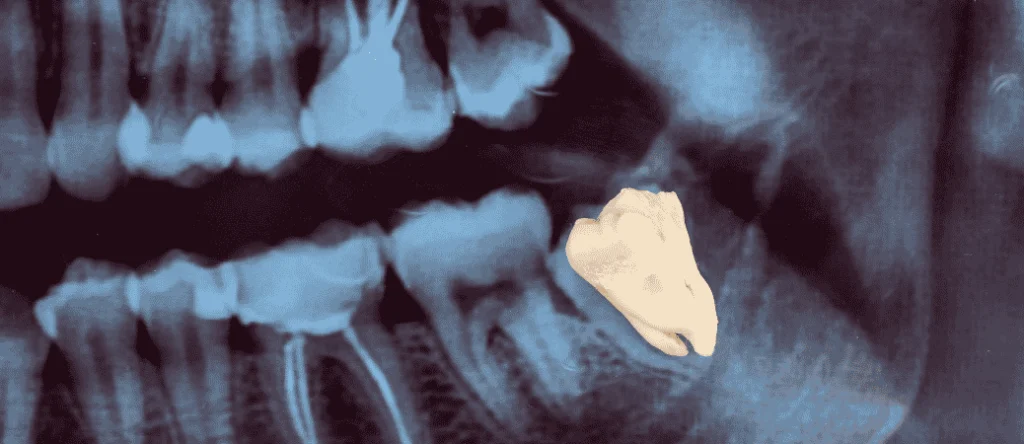


A sore jaw and a throbbing socket in the first day or two after a tooth is pulled are expected parts of healing.
Most people feel their worst around day two or three, then notice steady improvement from there.
Pain after tooth extraction that keeps easing day by day is the clearest sign your mouth is healing the way it should.
What worries people isn’t the ache itself. It’s not knowing whether that ache is on track, or whether it’s the start of something that needs a dentist’s attention.
This kind of uncertainty is common, especially late at night when a dental office is closed and every twinge feels bigger than it is.
Knowing the pattern normal healing follows, and the signs that break from it, can help you rest easier while your extraction site closes up.
Key Takeaways
- Pain that gradually improves day by day is the strongest sign of normal healing after a tooth extraction.
- Pain that worsens, returns, or spreads toward your ear after day three can point to dry socket, infection, or another complication.
- Gentle home care, cold compresses, soft foods, and correctly used pain relievers, can ease discomfort without disturbing the healing clot.
Table of Content
- What the First Two Weeks of Healing Usually Feel Like
- Which Symptoms Usually Fit Normal Recovery?
- Warning Signs That Need a Dental Check
- How to Ease Discomfort Without Disturbing the Clot
- When Improving Pain Is Reassuring – and When to Call Your Dentist
- Frequently Asked Questions
What the First Two Weeks of Healing Usually Feel Like
Once your dentist determines that a tooth extraction is necessary, understanding the recovery process can make the days afterward easier to manage.
Healing follows a general pattern, although everyone recovers at a different pace.
Soreness tends to build over the first couple of days, hold steady for a bit, then fade gradually as new tissue fills in the socket.
The First 24 Hours: Clot Formation, Oozing, and Early Soreness
A blood clot forms in the empty socket within the first hour or two, and protecting it is the top priority.
This clot covers the bone and nerve endings underneath, so anything that dislodges it, like forceful rinsing, spitting, or sucking through a straw, can slow healing.
Minor bleeding or blood-tinged saliva is common during this window. Biting gently on gauze for the time your dentist recommends helps the clot form properly.
As the numbness wears off, mild throbbing pain and tenderness usually start to set in.
Days 2–3: Why Swelling and Discomfort May Peak
Swelling and soreness often reach their highest point around day two or three before starting to ease.
This happens because your body’s inflammatory response, the swelling, warmth, and tenderness that come with tissue repair, is in full gear during this stretch.
Chewing near the extraction site, opening your mouth wide, or lying flat can all feel more uncomfortable during these days.
This is especially true after a wisdom tooth extraction, since impacted teeth often involve more tissue and bone disruption.
Discomfort during this window should still feel manageable with rest and the pain relief your dentist recommended.
Days 4–7: Signs the Extraction Site Is Settling
Noticeable improvement typically shows up between day four and day seven.
Swelling starts to go down, jaw stiffness eases, and eating becomes less of a chore, even if the socket itself still feels tender to the touch.
Some tenderness lingering into this stretch isn’t unusual, particularly after a surgical or multi-tooth extraction.
What matters is the trend: symptoms should be getting better, not worse, and not staying flat with no change.
Week 2 and Beyond: Residual Tenderness and Socket Closure
Gum tissue over the socket usually closes within one to two weeks, though the bone underneath keeps rebuilding quietly for months afterward.
Mild tenderness can still show up when you bite down directly on the area, especially after a harder extraction.
Delayed healing sometimes happens in people who smoke, have certain health conditions, or have a particularly difficult extraction.
If soreness is still sharp, throbbing, or getting worse at this stage, it’s worth a call to your dentist rather than waiting it out.
Which Symptoms Usually Fit Normal Recovery?
Soreness, mild swelling, jaw stiffness, and sensitivity in nearby teeth all fall within the range of normal healing after an extraction.
These symptoms tend to improve gradually and respond to basic pain relief and rest, without spreading or intensifying out of nowhere.
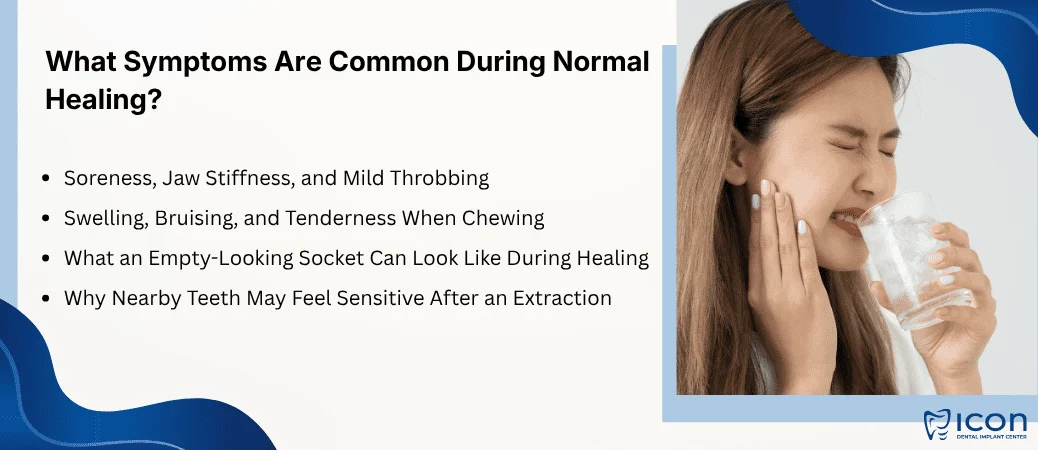
Soreness, Jaw Stiffness, and Mild Throbbing
A dull ache around the extraction site is one of the most common normal symptoms.
Mild throbbing, especially right after the anesthetic wears off, and a stiff, tired jaw from holding your mouth open during the procedure, are also expected.
These symptoms typically respond well to over-the-counter pain relief and rest. They shouldn’t feel sharp, worsening, or hard to manage past the first few days.
Swelling, Bruising, and Tenderness When Chewing
Mild facial swelling and some bruising near the jaw are common after extractions, especially surgical ones. Swelling usually peaks within the first two to three days, then begins shrinking steadily.
Chewing on the affected side often feels uncomfortable for a week or more, which is why many people switch to the opposite side while eating soft foods.
This tenderness should ease gradually rather than staying constant or intensifying.
What an Empty-Looking Socket Can Look Like During Healing
An empty socket can look concerning even when healing is going fine. In the early days, you may see a dark red or purplish clot sitting in the socket.
As healing continues, a whitish or pale yellow layer of healing tissue often forms over the site, which some people mistake for infection or exposed bone.
This whitish tissue is a normal part of the healing process in many cases, but appearance alone isn’t a reliable way to rule out a post-extraction complication.
A dentist can look at the socket in person and tell you what’s expected for your stage of healing versus what needs a closer look.
Why Nearby Teeth May Feel Sensitive After an Extraction
Teeth next to the extraction site can feel tender or sensitive for a while after the procedure.
Pressure from the extraction instruments, mild inflammation in the surrounding gum, and even referred nerve sensations can all cause this kind of temporary discomfort.
This sensitivity usually settles down within a week or two as swelling goes down and the gum tissue calms.
If a specific tooth stays painful or becomes more sensitive over time, mention it at your follow-up visit.
Warning Signs That Need a Dental Check
Pain that gets worse instead of better, especially after day three, is the clearest sign something beyond normal healing may be going on.
Severe throbbing, pain that spreads to your ear, visible bone in the socket, pus, fever, or ongoing numbness all call for a dentist’s evaluation rather than more time at home.
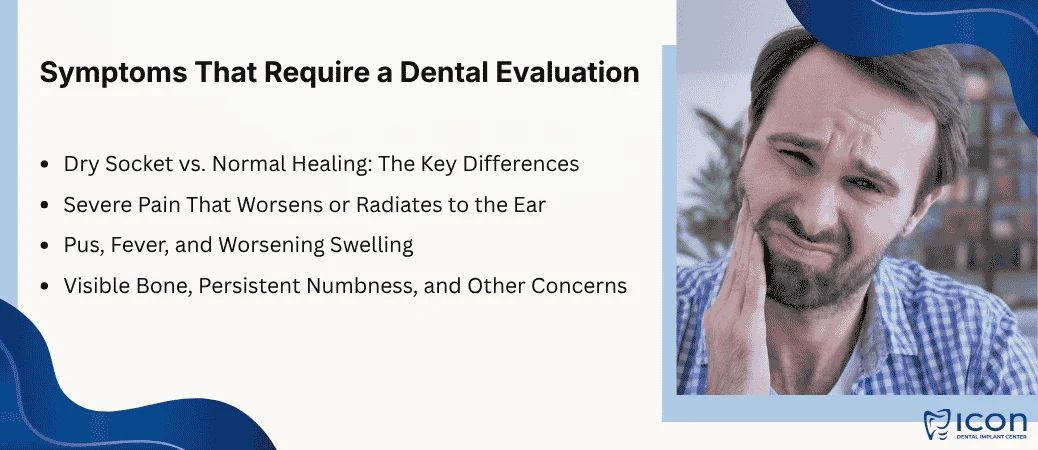
Dry Socket vs. Normal Healing: The Key Differences
Dry socket happens when the blood clot protecting the socket comes loose or dissolves too early, exposing the bone and nerve underneath.
The clearest difference between dry socket and normal healing is the direction pain moves: normal pain is worse in the first day or two and eases a little each day, while dry socket pain typically eases briefly before turning sharply worse a few days after the extraction.
| Normal Healing | Dry Socket | |
| Pain pattern | Peaks days 2-3, then improves | Improves briefly, then worsens sharply |
| Timing | Present from day 1 | Often starts days 3-5 |
| Socket appearance | Dark clot or pale healing tissue | Visible bone, empty-looking socket |
| Odor/taste | Mild or none | Foul taste or smell common |
| Pain location | Localized to socket | Can radiate to ear, jaw, or temple |
If your pain pattern looks closer to the right column, contact your dentist rather than waiting to see if it resolves on its own.
Severe Pain That Worsens or Radiates to the Ear
Pain that spreads from the socket toward your ear, temple, or neck is not part of typical healing.
This kind of radiating pain can signal dry socket, nerve irritation, or another complication that needs a dentist’s evaluation.
Severe pain that keeps intensifying, rather than leveling off or easing, is one of the more reliable signals that something needs attention.
Pain scores matter less than the trend: worsening is the flag, not just intensity on any single day.
Pus, Fever, and Worsening Swelling
Pus or a yellowish discharge from the socket, along with fever, chills, or feeling increasingly unwell, points toward infection.
Swelling that keeps growing days after the extraction, especially if it spreads across your face or feels hard to the touch, is a red flag worth monitoring closely.
Call your dentist promptly if you notice these symptoms together. If swelling starts to affect your ability to swallow or breathe, treat that as an emergency and seek care right away.
Visible Bone, Persistent Numbness, and Other Concerns
Visible bone in the socket, ongoing numbness in your lip, chin, or tongue beyond the expected numbing period, or a gray discoloration of nearby tissue are all reasons to check in with your dentist.
Nerve irritation from the extraction can sometimes cause lingering numbness or tingling that needs monitoring.
Trying to diagnose these issues yourself by comparing your socket to photos online isn’t reliable.
A dentist needs to examine the site directly to confirm what’s happening and recommend the right treatment.
How to Ease Discomfort Without Disturbing the Clot
Gentle, targeted care can ease pain after a tooth extraction while protecting the healing clot underneath.
The safest approach combines correctly used pain medicine, cold therapy, soft foods, and cautious oral hygiene, all guided by your dentist’s specific instructions.
Using Gauze Safely for Minor Bleeding
Light bleeding or oozing is common in the first several hours after extraction.
Fold a clean piece of gauze, place it directly over the socket, and bite down with steady pressure for the length of time your dentist recommends, usually in 30-to-45-minute intervals.
Avoid changing the gauze too often, since repeated checking can disturb the forming clot. If bleeding continues heavily beyond what your dentist described, or soaks through gauze repeatedly, call the office.
Cold Compresses and Ice Packs for Swelling
A cold compress or ice pack wrapped in a thin towel, applied to the outside of your cheek, can help control swelling during the first day or two.
Short sessions of 15-to-20 minutes on, then off, tend to work better than continuous icing.
Cold therapy works best early in recovery, generally within the first 24 to 48 hours, before switching to warmth if your dentist suggests it for later-stage stiffness.
Pain Medicine: When Ibuprofen May Help
Ibuprofen, alone or combined with acetaminophen, is often recommended as a first-line option for extraction pain.
The American Dental Association’s guideline on managing acute dental pain points to nonsteroidal anti-inflammatory medicines as effective first-choice care for many patients.
These medicines aren’t right for everyone. Check with your dentist, physician, or pharmacist first if you have kidney or liver disease, stomach ulcers, bleeding disorders, certain heart conditions, or known drug allergies, and always follow label directions on dosing and timing.
What to Eat and Drink After Tooth Extraction
Soft foods and cool or lukewarm liquids are easiest on a healing socket in the first few days.
Options like yogurt, mashed potatoes, scrambled eggs, and smoothies (eaten with a spoon, not sipped through a straw) provide nutrition without disturbing the clot.
Avoid hot foods, crunchy snacks, and anything that requires heavy chewing near the extraction site for at least the first few days.
Straws create suction that can dislodge the clot, so it’s best to skip them until your dentist gives the go-ahead.
When to Start Salt Water Rinses and Gentle Cleaning
Gentle salt water rinses usually start about 24 hours after the extraction, once the initial clot has had time to stabilize.
Mix a small amount of salt into warm water and let it flow gently in your mouth rather than swishing forcefully or spitting hard.
Brushing near, but not directly on, the extraction site keeps the rest of your mouth clean without disturbing healing tissue.
Your dentist may give you specific timing for rinsing based on your procedure, so follow those instructions over general guidance.
When Improving Pain Is Reassuring – and When to Call Your Dentist
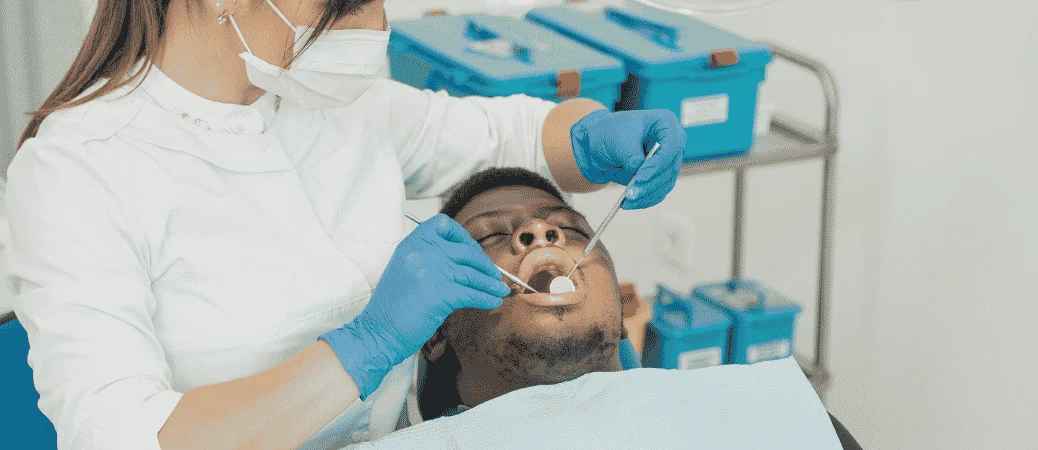
Pain that improves a little each day is the single most reassuring sign your extraction site is healing normally.
This pattern matters more than the exact pain level on any given day, since everyone’s baseline pain tolerance is different.
Call your dentist if pain stalls for several days without any change, starts climbing again after it has been getting better, or shows up alongside fever, pus, or swelling that keeps spreading.
These patterns point toward post-extraction complications like dry socket or infection that need a professional look, not more time waiting at home.
Delayed healing sometimes shows up in people with certain health conditions, smokers, or after a particularly involved extraction.
Even then, your dentist would rather hear from you early than have you manage a worsening problem alone.
If you’re nervous about an upcoming extraction, learning about the available types of sedation dentistry can also help you understand how your dental team may keep you comfortable during the procedure.
Trust the direction your symptoms are moving. Better each day means healing is on track; worse, stalled, or returning pain means it’s time to pick up the phone.
Frequently Asked Questions
Why is day 3 often the worst after a tooth extraction?
Swelling and inflammation from the body’s healing response typically peak around day two or three, which is why discomfort often feels strongest during this window.
This is a normal part of recovery, not a sign of a problem, as long as symptoms begin easing afterward.
Is throbbing pain after tooth extraction always a dry socket?
No, mild to moderate throbbing is common in the first few days as anesthesia wears off and healing begins.
Throbbing pain that starts easing, then suddenly turns sharp and severe, especially days three to five after the extraction, is more concerning and worth a call to your dentist.
How do I know the difference between normal pain and dry socket?
The clearest clue is direction: normal pain peaks early and steadily improves, while dry socket pain often eases briefly, then turns sharply worse a few days later.
A foul taste, visible bone in the socket, and pain radiating to your ear are additional signs that point toward dry socket rather than typical healing.
Is tooth extraction pain after 7 days normal?
Mild tenderness at day seven can be normal, especially after a wisdom tooth or surgical extraction.
Ongoing throbbing, intense pain, or discomfort that isn’t clearly improving by this point should be checked by your dentist rather than managed at home indefinitely.
How long can surrounding teeth hurt after an extraction?
Nearby teeth can feel sensitive or tender for one to two weeks after an extraction due to pressure and mild inflammation during the procedure.
If sensitivity in a specific tooth continues beyond that or gets worse, mention it at your follow-up visit.
What should I do if pain gets worse after tooth extraction?
Contact your dentist if pain intensifies instead of gradually improving, especially after day three.
Worsening pain, particularly alongside swelling, fever, pus, or a foul taste, needs a professional evaluation rather than more time waiting at home.